Theme #3 Criminal interference

Teachers: We see young people slipping into crime first

Rita van Dijk and Alex Straathof interview Bregje van Goethem and Frank Planten, October 2026

Frank Planten noticed that pupils who wanted to leave school all told the same story. They were quitting to become roofers, and they’d already lined up a job. ‘At first I thought: coincidence. But at some point, I started wondering: how is it that suddenly everyone in Den Bosch wants to become a roofer?’ He dug into that world and discovered that part of the roofing trade was being used as a front for criminal activity. When he reported it within the school, colleagues recognised the pattern immediately. The local council later confirmed that Den Bosch had a strikingly high number of roofing companies. The case eventually became the subject of programmes by Nieuwsuur and Zembla.

Frank Planten and his colleague Bregje van Goethem both teach in vocational education (MBO). In that role, they developed a training course for teachers to help them recognise signs of criminal involvement among young people. They now deliver that training right across the country.

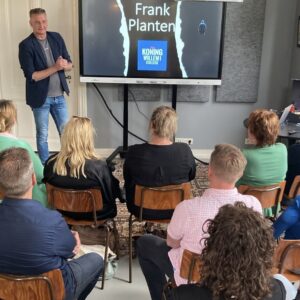
Frank Planten

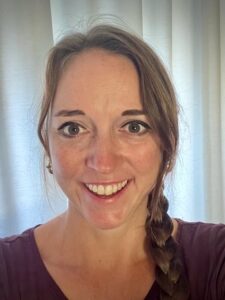
Bregje van Goethem

How big is the problem of young people being used for criminal activities at your own school?

Frank Planten: ‘You only see it once you know what to look for. Teachers do get a gut feeling, but they can’t put their finger on it. They don’t know young people’s online world. The moment we help them recognise the signs, the penny drops: oh, now I understand what was going on with Maarten last year. Or why Mohammed left school to become a roofer. Suddenly everything falls into place.’

At what age do young people end up in crime?

Frank Planten: ‘By the time they reach us in vocational education, they’re already 16, 17, 18. But every conversation I have with young people who are caught in this shows that they took their first steps around the age they started secondary school. By the time they reach vocational education, they’re already two or three years further down that road.

'They know that Ridouan Taghi's line ”those who talk, walk” is carried out'

‘Vocational education covers a lot of trades that are attractive for criminal exploitation. And that’s not unique to vocational education, either. You might first think of the lab technician cooking up pills, but it also applies to the electrician wiring heat lamps into a shed, the plumber installing a drainage system for a cannabis farm, or the carpenter fitting insulation panels so a drone can’t detect the heat source. Any trade that’s useful in the legitimate world is just as useful in the criminal one.

‘Recruitment happens later in life too. A carpenter looking to go self-employed quickly needs €25,000 to €28,000 for a works van and tools. At that point he’s approached with a job that pays better than average. That’s convenient. He does ordinary carpentry work, but that’s how he gets drawn in. And the next time he has another job lined up, he’s told to cancel it. Did he really think he’d get paid that much for such a small job for nothing? That’s how subtle it is.’

What do you know about the numbers of young people involved?

Bregje van Goethem: ‘We don’t know exactly. You can’t stand in a classroom and ask who’s caught up in a criminal network. But what stands out is that after every training session we run, participants say: “We’ve got at least a couple of those at our place too”.’

Frank PLanten: ‘And the numbers won’t shoot up just because we’re getting better at spotting the signs. Young people are genuinely afraid of reprisals. They all know someone in their circle who used to be around and isn’t any more. They know that Ridouan Taghi’s line ”those who talk, walk” is carried out. Even against people their age. So, they’re not quick to snitch, not quick to talk. They only do that when they’re completely stuck and genuinely want out.’

What role do young people play within criminal networks?

Frank Planten: ‘You’ve got runners doing courier work, moving drugs around. Young people are also used in growing and packaging. Filling little envelopes with coke, trimming buds off a cannabis plant. You don’t need any training for that. Those jobs are done by 13, 14, 15-year-olds. Keeping lookout is now being done by 11 and 12-year-olds. The jobs that used to go to 13 and 14-year-olds are shifting down to 10 to 12-year-olds.’

Bregje van Goethem: ‘We’re also seeing pupils used as money mules. They open an account in their own name, money gets paid in and then withdrawn again.’

How does the criminal recruitment work?

Frank Planten: ‘Always through people they know: at the sports club, in the school playground, in the neighbourhood. They’re taken to meet what’s known as the ‘local prince’, the criminal middleman who gets them working. They rarely have any contact with the very top, that’s a small circle of no more than five or six people.

‘If you're thirteen and you're talked into owing €6,000, that's an enormous amount of money’

‘At first, young people are won over with gifts or clothes. Then it’s tested how loyal they are: will they lend out their bank card, will they dare to stand lookout? If that goes well, they’re saddled with a ‘street debt’. They then must work for the criminals to pay it off. If you’re thirteen and you’re talked into owing €6,000, that’s an enormous amount of money. It leaves young people feeling there’s no way out.’

Bregje van Goethem: ‘Recruitment also happens via social media. It’s becoming ever easier for young people to think, ‘I wouldn’t mind making some quick money.’ They respond to posts like ‘Want to earn 200 euros?’ without knowing what’s involved. Often, they don’t even get the money, especially if things go wrong and then they’re put under pressure.

‘Within vocational education, we also see placement fraud as a way in. Young people buy ‘signed-off placements’ where they don’t put in the hours. They think they’ve got off lightly, but they’re then asked to do a criminal job. If they kick up a fuss, they’re threatened with being reported to their course provider for the fraud.’

What’s the profile of these young people?

Frank Planten: ‘Often vulnerable young people: living in poverty, looking for status, with a mild learning disability, or growing up without a father figure. That last point shouldn’t be read the wrong way round: growing up without a father doesn’t automatically make you a criminal. But criminals play on it flawlessly. They step temporarily into that father role and answer the questions such a young person is wrestling with.

‘It’s also about young people who are bullied, who are lonely, who see little prospect ahead of them. If you’re training to be a supermarket shelf-stacker’s assistant and you see that driving across the border and back three times pays far more, that choice becomes a lot easier to understand.’

Bregje van Goethem: ‘But there’s a wider social shift under way too. You increasingly don’t need to come from a vulnerable situation to end up in crime. Influencers push an image of how you should look and what determines your status. That makes young people vulnerable simply because they’re young and their brains aren’t fully developed yet. This makes the target group much broader.

‘Online gambling is an additional threat. It’s made available online with an incredibly low barrier to entry. A lot of young people get caught up in it and build up debts. They think they can pay those debts off with a few criminal jobs. Young people with debts, generally speaking, are vulnerable to ending up in crime.’

You talk about ‘criminal exploitation’ rather than ‘criminal infiltration’. Why?

Bregje van Goethem: ‘That’s a deliberate choice. Young people often start out as victims, but that’s long gone unrecognised. Initially they come into view as offenders, because they’re the ones caught dealing. What used to follow almost automatically was that they’d be expelled from school. But that doesn’t help that young person at all. You’re just adding another risk factor. Behaviour needs consequences, but you have to think carefully about which consequences genuinely help, and whether there are alternatives.’

Frank Planten: ‘We once carried out an operation on the ICT floor, police, dogs, every locker checked. A bag of weed was found on one pupil. At half past four, his mother rang: “I heard you held a drugs operation. I completely agree with that, and it’s good that you’re taking social responsibility. But that bag of weed is mine, and I’d like it back.” So that boy was dealing on his mother’s instructions. That turns it into a completely different story. Working out how to genuinely help a young person always requires a tailored approach.’

What effect does your training have?

Bregje van Goethem: ‘Avans University of Applied Sciences carried out research into its effectiveness. Teachers do indeed learn to spot the signs, but four weeks after the training, the effect gradually fades. It’s a starting point, but you need sustained attention. We’re campaigning for a designated lead, a named person responsible for keeping the subject on the agenda.
‘What you're not allowed to do in education is look away’

‘Say a student’s grades start slipping. That alone doesn’t tell you much. But if their form tutor also reports that they’ve suddenly got expensive belongings, and the caretaker mentions that two older lads in an expensive car drop her off and pick her up every day — it might still turn out to be something other than crime, but by that point you’ve got a gut feeling building. That’s when you need to escalate.

‘What we run into is that teachers are afraid of falsely accusing someone. But we never accuse anyone. Your starting point is I’m worried. We need to move from a culture where teachers are afraid to ‘snitch’, to a culture built around a duty of care. The core of that is: we’re worried about our young people, and we’re going to stand by them. And if it turns out we worried too much, that’s fine too.’

Frank Planten: ‘What you’re not allowed to do in education is look away. So, you have to flag it. But that doesn’t mean every teacher has to solve it themselves. As a school, you need someone who formally carries that responsibility: a designated lead who knows the ins and outs and picks it up. You can’t expect that of every teacher or caretaker.’

How does young people’s involvement in crime affect the school’s culture?

Bregje van Goethem: ‘It’s hard to filter out exactly where a classroom’s culture comes from. But what you do see is that young people sometimes now earn more than the teacher standing in front of them, and that does something to the atmosphere in a group. The influence of social media on classroom culture is enormous — I’m thinking, for instance, of the manosphere. There are also plenty of young people who are frightened. They carry weapons because they know others do too.’

Frank Planten: ‘What we come across a lot is the gap between a teacher and a pupil. It’s simply immense. Naivety among education staff on this subject is huge. I’ve often been struck, within vocational education, by how little pedagogical training teachers get on their courses. And yet they’re put in front of a class with 16 or 20 different kinds of young people in it: one with ADHD, another with autism, another coming from a home they’d rather not go back to. I think we need to address that as a society. There’ll need to be a cultural shift around the role of the teacher. Artificial intelligence is going to take over the didactic side of teaching. So, the pedagogical side will become far more important in teacher training and in pathways for career switchers. Because that’s how, with a genuinely good pedagogical approach, you can actually build that connection with your students, which is what lets you help them further and grow within this society.’

Are you working to make this cultural change happen among teachers?

Bregje van Goethem: ‘Definitely. We’ve now set up a training course for a designated lead on subversive crime and criminal exploitation. Alongside the warning signs, we also look at: what do you need, as a designated lead? Which levers within the organisation need to be pulled to achieve the culture you want? We work from three pillars: relatedness, competence and autonomy. All three need to be in place. So: do staff feel a sense of urgency, do they know why they’re doing this, do they feel connected to it? Do they have the competencies: both knowledge of what the warning signs of criminal exploitation look like, and knowing what to do with that information and where to report it? We try to instil the habit that every discussion about a student or pupil includes the question: is there anything notable going on? So not just looking at the didactic side — are the grades in order — but also at how this student is doing. There are schools that do this really well. But there are also places where this barely happens at all.’

What’s the school’s role in tackling crime among young people?

Bregje van Goethem: ‘We see young people for around 30 hours a week. That means we see a huge chunk of their lives. A lot of information, in other words, but too little is currently done with it. What comes up time and again is people saying afterwards: we’d noticed for ages that that boy was sliding downhill. So why was nothing ever done about it?

‘The biggest opportunity for education lies in prevention. We can play a major role in early detection, but only if we’re properly set up for it. Looking at partners in the field, I see that education is often left out of the approach. I’ve since found out that it depends on both parties. Education has been very closed off for a long time, and other agencies don’t see what role education can play. It means we need to build that signalling function into schools and agree with partners on who does what. We can’t solve the problem ourselves. But we can contribute to spotting early on that young people are sliding into crime. And sometimes we can flag trends and developments, because we’re often the first to see something changing in young people’s world.’

What does this new role mean for the culture?

Bregje van Goethem: ‘It calls for a culture in which the duty of care towards young people is genuinely taken seriously. That means a high willingness to report concerns. It requires a shift in thinking — from ‘I might be falsely accusing someone’ to ‘I’m looking out for someone.’ And within that, you simply have to stay switched on: knowing what’s going on and talking about it with each other.’

Read more

‘Just a quick job’: young people drawn into crime