The theory of organisational culture and culture change
Culture change is a complex challenge, where an understanding of the underlying theory is invaluable. On this page, we aim to bridge the gap between theory and practice through a series of short texts. The focus is on how culture is structured and in what way theory can contribute to the effective realisation of change within organisational cultures. In the next themed issues further theoretical texts will be published.
The first and second contributions below were written by Alex Straathof, and the third and fourth by Rita van Dijk.
-
1. What is a organisational culture?
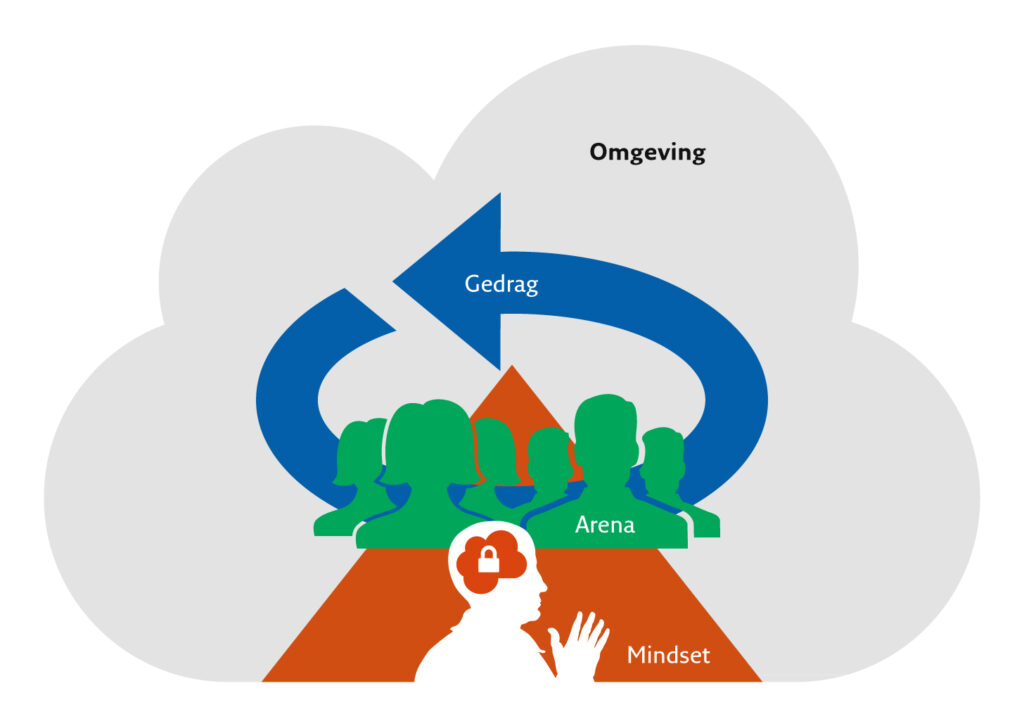
Every organisation develops its own culture over time. This culture reflects a distinctive behavioural repertoire, shaped by a particular way of thinking (mindset) and a specific constellation of influential people and groups (arena). The mindset consists of shared beliefs among staff about ‘how things are done here’ and what constitutes desirable behaviour. The arena gives rise to recurring patterns of interaction. Together, mindset and arena produce the characteristic behaviours of the organisation. What begins as implicit and situational gradually evolves into established routines in both thought and action. In this way, organisational culture emerges: a deeply rooted interplay of people and underlying logics that guides decision-making, collaboration, and how the organisation responds to its environment.
-
2. What is the mindset of a group of people?
A mindset is the collection of beliefs and assumptions that legitimise behaviour within a group or organisation. This belief system shapes how people interpret situations and how they respond. Behaviour is therefore influenced not just by external events, but by the beliefs these events activate. In social settings such as teams or organisations, a collective mindset emerges—one that includes group values, self-justifying assumptions, and shared norms. Such a mindset is layered: from specific ideas to deeply rooted views that are widely shared, for example within an industry or even across a national culture. Behavioural change often requires a shift in mindset. Yet because beliefs are experienced locally as ‘truths’, changing a mindset is complex. It calls for a deeper understanding of the underlying dynamics that give these belief systems their strength and persistence.
-
3. How is the arena of an organisation composed?
A group arena is the informal playing field within a team where the real dynamics unfold: who holds influence, who follows, and which unwritten rules apply. This doesn’t emerge automatically. It’s usually not the formal guidelines, but those who navigate difficult situations effectively who set the tone. They shape what is seen as ‘normal’, how problems are tackled, and whose voice carries weight. This role may lie with a manager, but just as often with informal leaders or small coalitions. Through ongoing interactions, team members develop a shared sense of what works and what doesn’t. In this way, norms, behavioural patterns, and hierarchies emerge. The arena has a powerful influence on culture, reinforcing shared perceptions and creating both stability and resistance to change.
-
4. Behaviour and behaviour patterns
Behaviour is visible, and therefore open to discussion. It’s about what someone does – or doesn’t do – in a given situation. For example, a team member who raises a problem openly in a meeting is showing different behaviour from someone who avoids the issue or looks away. Culture goes a step deeper: it’s about patterns of behaviour. These are recurring, recognisable ways of acting that members of a group share. Think of a team that is used to solving problems internally rather than asking for help. Such patterns reveal something about the underlying mindset and the power dynamics within the group. Patterns of behaviour often persist for various reasons: 1. They were successful in the past: new ways of behaving still have to prove their worth. 2. Behaviours are usually interconnected; a change in one area can trigger a chain reaction that creates uncertainty. 3. Behaviour can become so ingrained that it turns into habit. We no longer reflect on why we do something – the original reason has literally faded from view. 4. Finally, there may be no appealing alternative behaviour. In such cases, there are no successful examples to follow. Anyone who wants to break behavioural patterns must therefore understand why they emerged in the first place – and what continues to sustain them today.