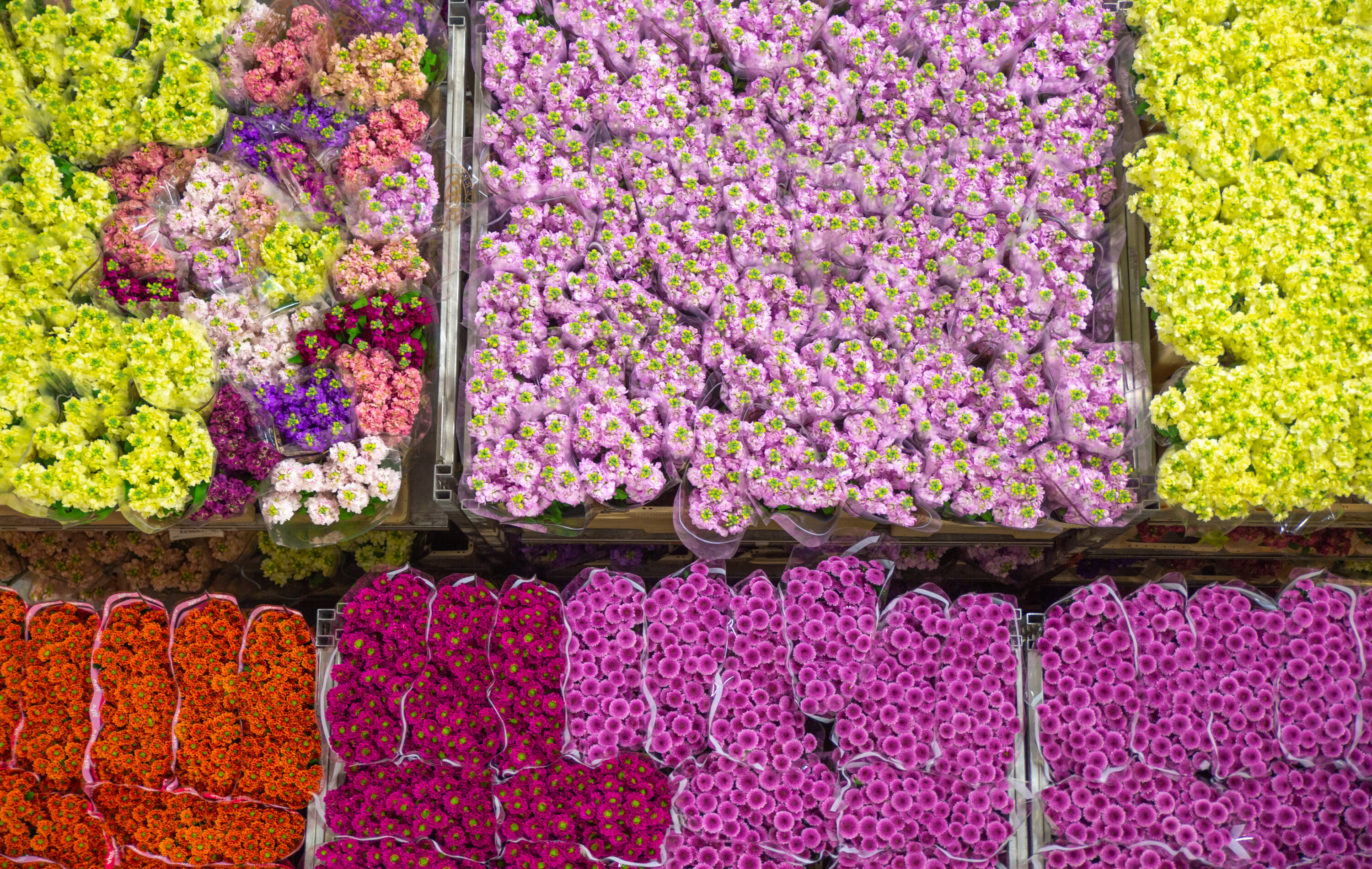
It’s early morning at a flower auction somewhere in the western Netherlands. Trolleys full of roses, tulips and orchids move through the halls in what looks like a perfectly oiled choreography. Drivers load lorries, traders make calls, boxes slide from cold store to dock. Everything runs on speed, precision and freshness.
But somewhere within that tight routine is a worker taking an atypical route. An unmarked van is parked in an odd spot. Someone is on the shop floor despite not being on shift. Small deviations in a system that is organised so tightly, and precisely for that reason, so vulnerable.
Because Dutch floriculture, with an export value of €12.3 billion in 2025, isn’t just a logistical marvel. It also offers an ideal infrastructure for criminals. While awareness of this vulnerability took hold long ago at the Port of Rotterdam and Schiphol Airport, in this sector that realisation has only really gained ground in the past few years.
A logistical paradise, for criminals too
Dutch floriculture is a global logistics powerhouse. Flowers cut yesterday in Kenya or Colombia can be standing in a vase in Paris or Berlin tomorrow. That speed and reliability rest on a fine-meshed network of auctions, distribution centres and thousands of daily transport movements. It’s precisely that efficiency that makes the sector attractive to criminals.
The report Mainport in de tweede linie: Over sierteelt en ondermijning (2021) (Mainport in the Second Line: Flower Trade and Undermining) goes into detail on the opportunities floriculture offers criminals. This also came up in our interview with Bas van Delden, who until early 2026 was programme manager of the Resilient Floriculture programme. We spoke with him about the role of the shop floor, the signals that should put you on alert, and what the industry itself can do.
The opportunities for criminals are clear. The Mainport in the Second Line report sums them up as a combination of close links to Schiphol and the Port of Rotterdam, almost unrestricted freight movement within Europe, and fixed transport flows that make nearly every destination reachable quickly and predictably.
The way the sector is structured only adds to its vulnerability to criminal interference. The trade chain has many links, transactions and points of transport, leaving little overall oversight. The growth of direct trade outside the auction system creates extra room for fraud, cash payments and abuse. Small businesses under financial pressure are especially exposed.
The general infrastructure is also strikingly open: anyone can drive onto an auction site unimpeded. Bas van Delden confirms this. The sites are often freely accessible, he says. ‘Few fences, few checks, little social correction from colleagues. You can walk around almost anywhere.’
Flowers are also transported in open boxes, making it relatively easy to add illegal goods to shipments, or remove them, without drawing attention. The hundreds of loading docks are hard to monitor. Companies also let others onto the premises, and activity can easily be kept out of sight. Flowers are prepared for transport at the docks — a convenient moment to hide drugs or other contraband in a shipment. Locked offices with safes are used for both legitimate and illegitimate transactions.
Because flowers are perishable and the trade carries such economic weight, checks and oversight at Europe’s internal borders are limited. ‘They’re not opened as a matter of course’, says Van Delden. ‘Only on a spot-check basis, at hubs like the ports or Schiphol. Opening a container immediately damages the shelf life. Inspectors are cautious because of possible damage claims and lost time. Once you’re past customs in the trading process, your chance of getting caught is fairly low.’
On top of this, the sector is naturally closed off. Willingness to report is low and contact with the authorities minimal. The industry is strongly oriented towards solving problems internally. A culture that is deeply rooted in family businesses. Signs of fraud, exploitation and smuggling therefore stay under the radar for a long time, while government presence and visibility in the sector and on its premises have long been limited.
How big is the problem?
Given the opportunities the industry offers, you might expect a clear picture of how deeply crime has penetrated floriculture. That picture is missing, not without reason. The report Mainport in the Second Line notes that information on crime in the flower and plant trade is fragmented: local or regional authorities often don’t learn from found contraband or uncovered fraud abroad. Fraud, labour exploitation, scams and cigarette smuggling are, moreover, well concealed, so they rarely make the statistics. The result: the criminal opportunities are better documented than the criminal practices themselves.
Hard cases do exist but remain limited to a handful of major ones. A flower wholesaler in the Westland has been suspected since 2026 of large-scale money laundering, with €300,000 in cash reportedly coming in each week. It’s precisely that lack of insight into the scale of criminal involvement that has had major consequences: the Resilient Floriculture programme therefore focused primarily on building support for the idea that a problem exists at all.